Contentful
Beyond Flaky Tests: The Strategic Value of Self-Healing Test Execution
Beyond Flaky Tests: The Strategic Value of Self-Healing Test Execution
If you have spent any time in Quality Assurance or test automation, you know the sinking feeling of a red build pipeline caused by a "flaky test." A developer changed a button's CSS class, a div container was renamed, or an ID shifted slightly, and suddenly, a perfectly good test fails. Historically, QA teams have spent an agonizing amount of time performing forensic analysis on failed tests, only to realize the application isn't broken—the test script is just outdated. This is the maintenance tax of test automation. Enter self-healing test execution. As AI begins to reshape the Software Development Life Cycle (SDLC), self-healing capabilities are transitioning from a luxury to an absolute necessity. Here is a look at the real value of self-healing tests and why they are critical for modern engineering teams.
What is Self-Healing Test Execution?
At its core, self-healing test automation uses AI and machine learning algorithms to dynamically detect and adapt to changes in the user interface (UI) or application code during runtime. When a test script looks for a specific element (like a "Submit" button) using a designated locator (like an XPath or CSS selector) and fails to find it, a traditional test simply crashes. A self-healing test, however, pauses. It analyzes the DOM, looks for alternative attributes (text, relative position, surrounding tags), identifies the new location of the element, updates the locator on the fly, and successfully completes the test.
The Core Value Proposition for QA Teams
The value of self-healing tests extends far beyond just making QA engineers' lives easier. It fundamentally alters the economics of software testing.
1. Drastic Reduction in Maintenance Tax
The most immediate benefit is time saved. In traditional automation, up to 30-40% of a QA engineer's time is spent maintaining existing test scripts rather than writing new ones. Self-healing algorithms automatically handle the trivial UI tweaks that usually cause false negatives, freeing up QA to focus on complex integration testing and edge cases.
2. Trustworthy CI/CD Pipelines
When tests fail constantly due to brittle locators, developers start ignoring the red alerts. This "boy who cried wolf" syndrome destroys trust in the continuous integration pipeline. Self-healing tests ensure that when a pipeline turns red, it is because of a legitimate application bug, not a broken CSS selector.
3. Accelerated Release Velocity
When developers push code, they need immediate, accurate feedback. If a build fails and requires manual QA intervention to fix a broken script before the code can be verified, deployment grinds to a halt. Self-healing execution keeps the pipeline moving, matching the rapid pace of modern DevOps.
The Before and After
Metric | Traditional Test Automation | Self-Healing Test Automation |
|---|---|---|
Pipeline Reliability | Low; highly susceptible to UI changes. | High; dynamically adapts to minor changes. |
Maintenance Effort | High; requires manual script updates daily. | Low; AI patches locators automatically. |
False Negatives | Common; broken tests mask working code. | Rare; failures usually indicate real bugs. |
Developer Trust | Erodes over time due to "flaky" alerts. | Remains high; alerts are actionable. |
The Ultimate Evolution: Agentic Self-Correction
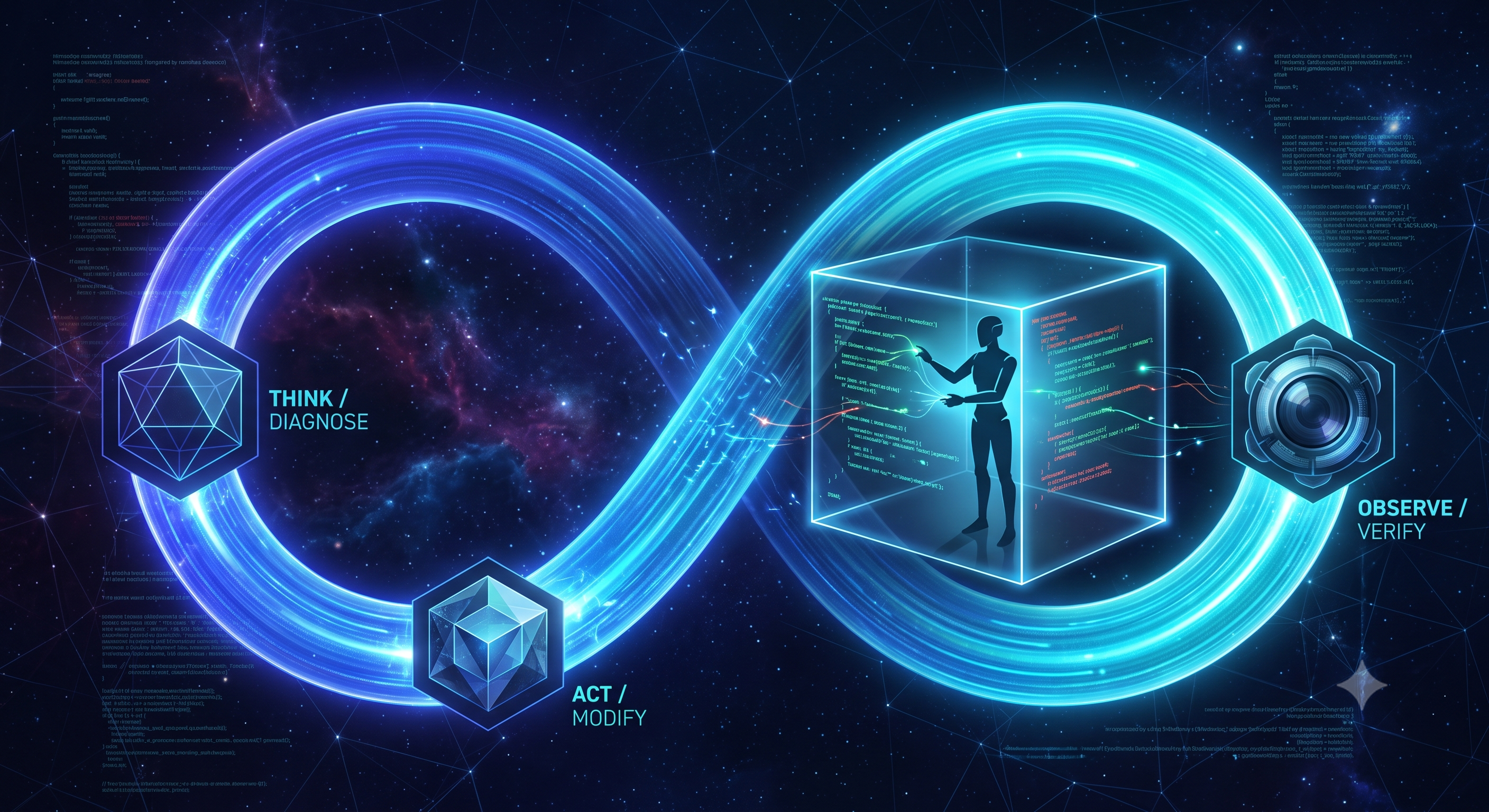
As we move into an era where AI coding agents write a massive volume of code, the concept of self-healing is expanding beyond just UI locators. It is being woven directly into the testing harness of the SDLC. Testing in an agentic workflow relies heavily on the harness to facilitate autonomous self-correction. When an AI agent writes a function, the development harness provides a sandboxed execution environment that allows automated tests to run. If a test fails in this environment, the process doesn't stop. Instead, the orchestration logic captures the error output and routes it directly back to the AI model, asking it to try again. The harness is what creates this automated 'think -> act -> observe' loop. In this new paradigm, "self-healing" isn't just about a test finding a moved button. It is about the entire system—the agent, the code, and the test—working in an automated loop to diagnose and resolve failures before a human ever reviews the pull request.
The Bottom Line
You cannot scale modern software delivery if your automated tests require constant manual supervision. By implementing self-healing test execution, organizations stop paying the ongoing tax of brittle scripts and empower their QA teams to focus on what actually matters: orchestrating comprehensive quality in an increasingly AI-driven world.