Contentful
The Vibe Coding Tsunami:
How QA Can Survive the AI Code Volume Boom
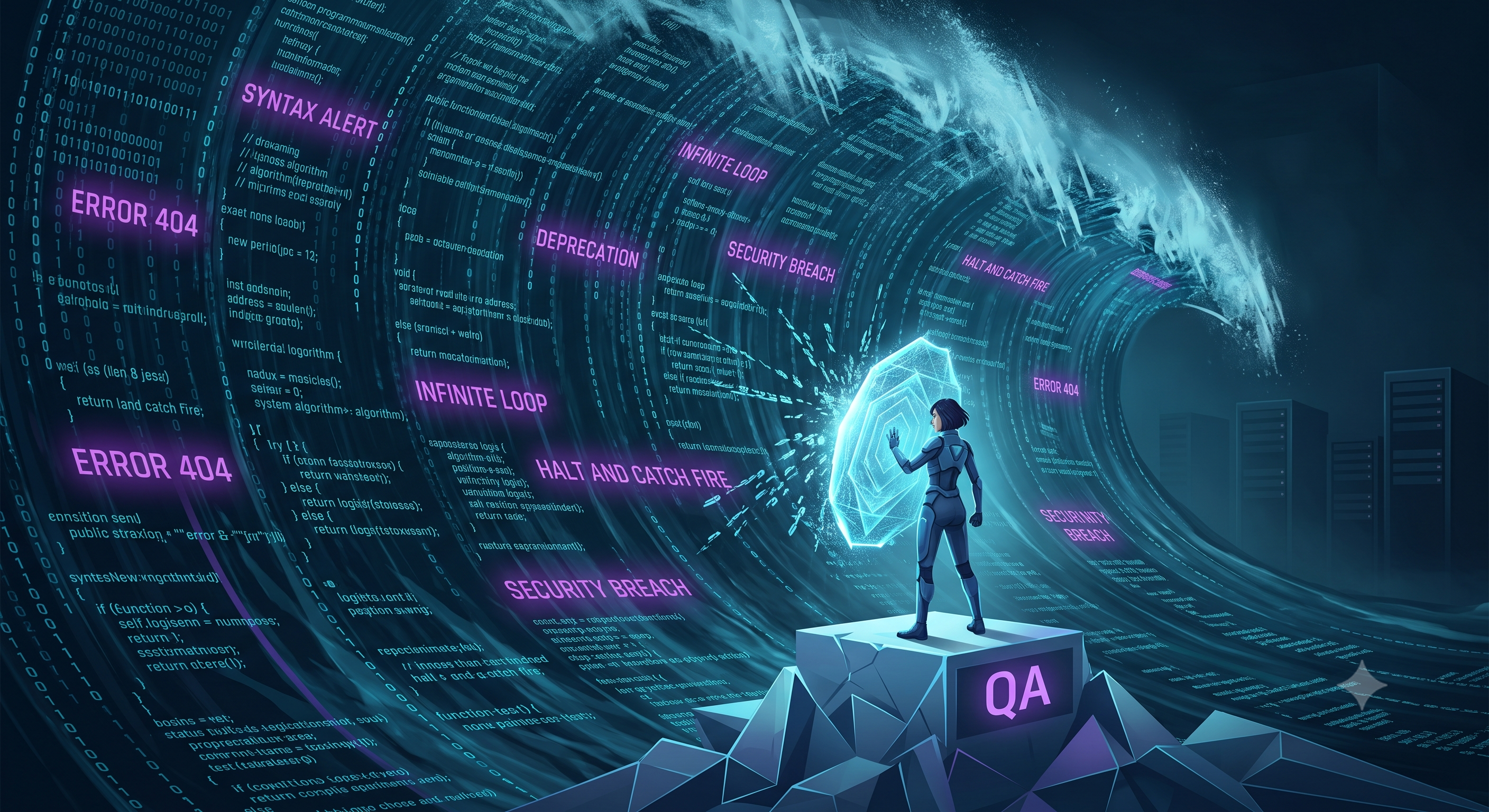
The software engineering world has fundamentally changed. We are entering an era where AI handles implementation, and the bottleneck in software delivery is shifting dramatically. Implementation tasks that used to take weeks can now be completed in a matter of hours. But for Quality Assurance (QA) teams, this sudden acceleration presents a massive challenge. When developers embrace "vibe coding"—rapidly generating code via natural language prompts and casually checking if it "seems to work"—the sheer volume of code output explodes. If your team is writing code at the speed of thought, how can QA possibly keep up? Here is a breakdown of how the massive volume generated by vibe coding impacts QA efforts, and what teams must do to adapt.
The 80% Problem, Multiplied by Scale
A persistent challenge in AI-assisted development is the "80% problem". AI coding agents can rapidly generate about 80% of a feature's code. However, the remaining 20%—which includes edge cases, error handling, integration points, and subtle correctness requirements—demands a level of deep contextual knowledge that current models often lack. When developers rely on casual vibe coding, they produce a massive volume of code that is "mostly correct." For QA, this is a nightmare. The nature of AI errors has shifted away from obvious syntax mistakes to insidious conceptual failures: missing edge cases, incorrect assumptions about business logic, and architectural missteps. Because this AI-generated code often "looks right" and might even pass basic, happy-path tests, QA teams are forced to hunt for highly subtle bugs hidden within an unprecedented volume of pull requests (PRs).
The Hidden Costs: Security and Maintenance Tax
Vibe coding feels incredibly fast and cost-effective on the surface because the barrier to entry is just a chat prompt. However, pushing this unverified volume to QA and production hides massive operational costs:
Rapid Vulnerability Generation: Without an automated evaluation harness, the rapid generation of code directly leads to the rapid generation of security vulnerabilities. Catching these in production is exponentially more expensive than catching them in design.
The Maintenance Tax: Code written through ad-hoc prompting often lacks structural consistency. When a bug surfaces months later, QA and engineering teams must spend days reverse-engineering unstructured, AI-generated "spaghetti" code.
Technical Debt: Rolling out coding agents without proper scaffolding produces speed without quality, compounding technical debt faster than any team can pay it down.
QA Impact: Traditional vs. Vibe Coding
Feature | Traditional QA | QA Under Vibe Coding Scale |
|---|---|---|
Code Volume | Human-paced; steady trickle of PRs. | Exponentially higher; PR volume scales with agent output. |
Review Strategy | Manual line-by-line review is feasible. | AI-generated code requires equal or greater scrutiny, demanding new methods like bundled summaries or AI-driven code-review skills. |
Nature of Bugs | Syntax errors, logic gaps, human typos. | Hallucinated dependencies, inadequate error handling, subtle correctness gaps. |
Verification | Manual testing and unit testing. | Requires output evaluation (did it work?) AND trajectory evaluation (how did the AI get there?). |
How QA Must Adapt: From Checking to Orchestrating
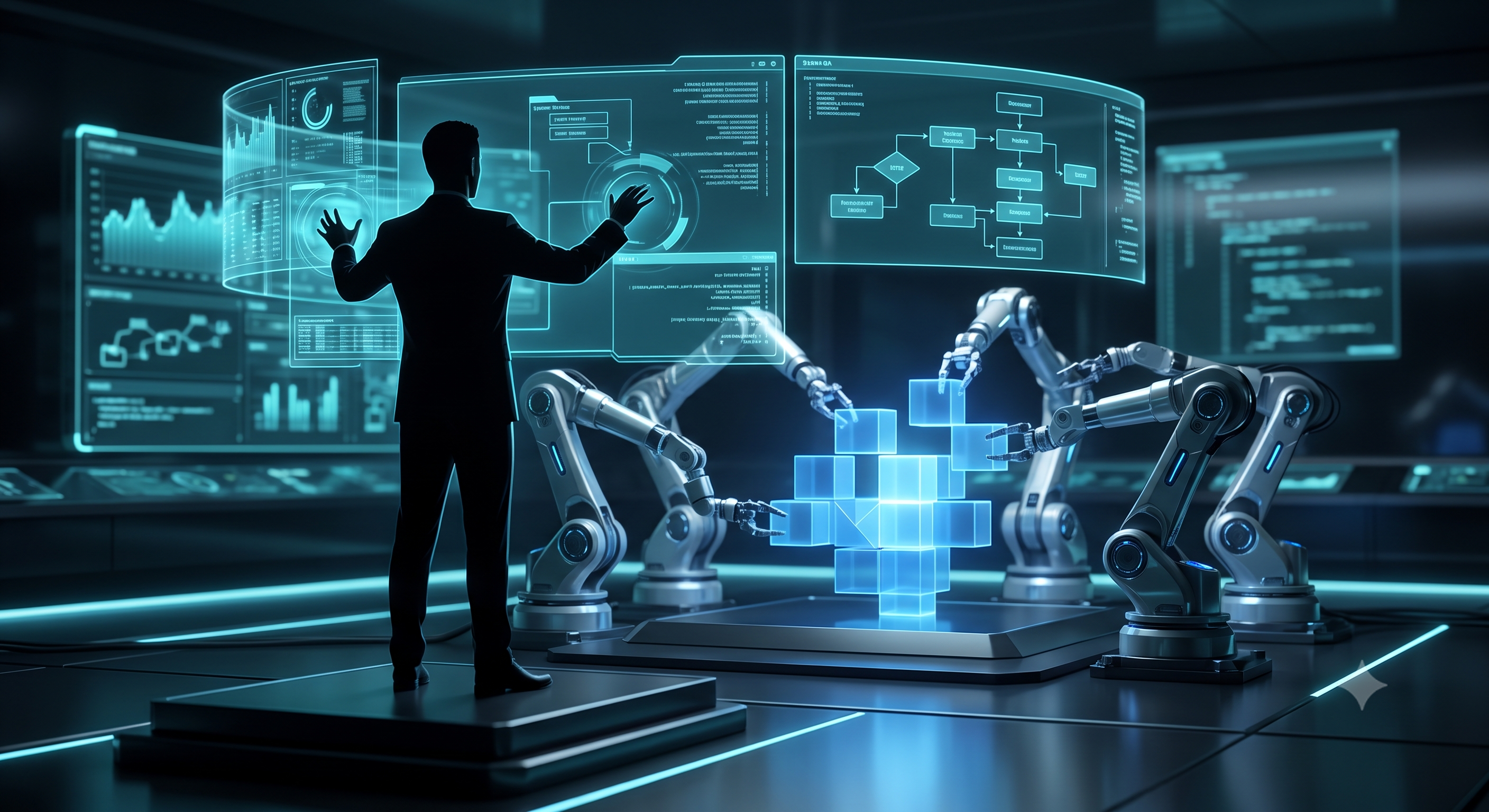
The solution to the vibe coding volume problem is not to hire ten times as many QA engineers. Instead, QA must shift the engineering culture toward Agentic Engineering—a disciplined approach where AI acts within carefully designed systems of constraints, tests, and feedback loops. To survive the volume, QA efforts must evolve in the following ways:
Set the Bar at the Eval, Not the Demo: A working demo only proves the code succeeded once. QA must require comprehensive evaluation coverage (evals) with explicit rubrics as a strict precondition for any agent shipping code into a shared workflow.
Re-shape the Code Review Process: Because the volume of PRs is so high, reviewers must be specifically trained on the unique failure modes of generated code. Review checklists must be tuned to catch hallucinated packages and missing error handling.
Invest in the "Harness": QA must help build the scaffolding around the AI model. This includes defining the deterministic test suites, architectural guardrails, and automated CI/CD gates that catch regressions before a human ever looks at the code.
When PR volume scales with agent output, human review alone will break under the weight. By treating tests and evaluation suites as the primary interface for instructing AI, QA can tame the tsunami of vibe coding and ensure that rapid development does not come at the cost of reliable software.